


Hey there! As a supplier of Meta Aramid Thread, I often get asked whether this stuff can be used for heavy - duty sewing. Well, let's dig into it and find out.
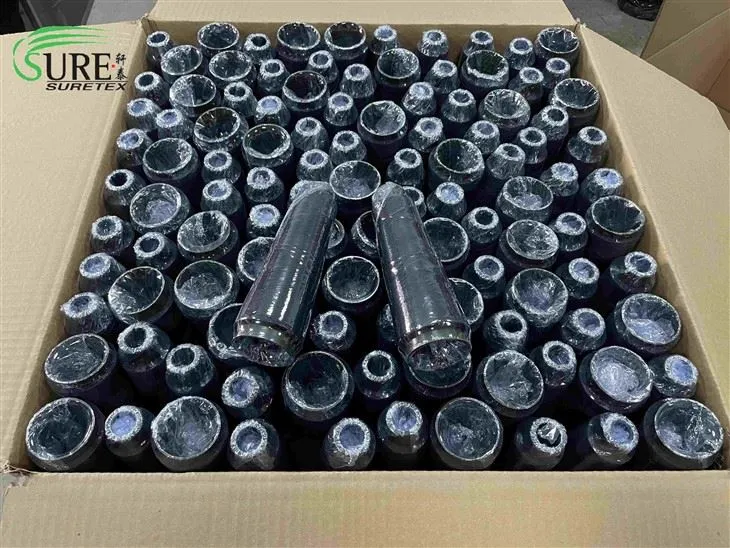
First off, let's talk a bit about what Meta Aramid Thread is. Meta aramid is a synthetic fiber known for its excellent heat resistance, flame resistance, and chemical stability. It's made through a complex chemical process that results in a fiber with some pretty amazing properties. These threads are created by spinning these meta aramid fibers together, and they come in various thicknesses and colors. You can check out our Coloured Aramid Thread and Black Aramid Thread options on our website.
Now, when it comes to heavy - duty sewing, there are a few key factors we need to consider: strength, durability, heat resistance, and abrasion resistance.
Strength
Meta Aramid Thread has a decent amount of strength. It can withstand a good amount of tension without breaking. In heavy - duty sewing, you're often dealing with thick materials like leather, canvas, or heavy - duty fabrics used in industrial applications. Meta aramid threads can hold up well when stitching through these tough materials. For example, if you're making a heavy - duty work bag or a protective cover for machinery, the thread needs to be strong enough to keep the seams together under stress. Meta Aramid Thread can handle the job. It won't snap easily like some regular sewing threads, which is a huge plus for heavy - duty projects.
Durability
Durability is all about how well the thread can stand up to wear and tear over time. Meta aramid fibers are known for their long - lasting nature. They don't degrade easily when exposed to the elements or normal usage. In heavy - duty sewing, the items you're making are likely to be used in harsh environments. Whether it's a tent that will be pitched in the mountains or a sail for a boat that will face strong winds and saltwater, Meta Aramid Thread can maintain its integrity. It resists fraying and doesn't lose its strength quickly, ensuring that your seams stay intact for a long time.
Heat Resistance
One of the standout features of Meta Aramid Thread is its heat resistance. In many heavy - duty applications, heat can be a major issue. For instance, in the automotive industry, when sewing parts of the engine compartment or heat - resistant covers, the thread needs to be able to handle high temperatures. Meta aramid threads can withstand temperatures up to a certain point without melting or losing their properties. This makes them ideal for use in environments where heat is a concern.
Abrasion Resistance
Abrasion is the wearing away of a material due to friction. In heavy - duty sewing, the thread is often rubbed against rough surfaces. Meta Aramid Thread has good abrasion resistance. When you're sewing through thick materials, the thread is going to be in contact with the fabric and other surfaces as it passes through the needle. The abrasion - resistant nature of Meta Aramid Thread means it won't wear down quickly. This is especially important in applications like making conveyor belts or heavy - duty clothing for workers in rough industries.
Applications
There are numerous heavy - duty applications where Meta Aramid Thread shines.
Industrial Upholstery
In industrial settings, furniture needs to be tough. Whether it's seating in a factory or a waiting area in a heavy - traffic location, the upholstery needs to be stitched with a strong thread. Meta Aramid Thread can be used to sew the fabric onto the frames, ensuring that the seams hold up under constant use.
Safety Equipment
Safety equipment like fire - resistant suits, bullet - proof vests, and protective gloves require high - quality stitching. Meta Aramid Thread's heat resistance and strength make it a great choice for these applications. It can keep the layers of protective materials together, providing reliable protection for the wearer.
Aerospace and Aviation
In the aerospace and aviation industries, precision and reliability are crucial. Meta Aramid Thread can be used in the construction of aircraft interiors, such as seat covers and partitions. It also meets the strict safety standards of these industries due to its heat and strength properties.
Marine Applications
Marine environments are harsh, with saltwater, strong winds, and constant movement. Meta Aramid Thread can be used to sew sails, boat covers, and other marine equipment. Its resistance to water, abrasion, and UV rays makes it suitable for these demanding conditions.
However, it's not all sunshine and rainbows. Meta Aramid Thread does have a few limitations.
Limitations
One limitation is that it can be a bit more expensive than some other sewing threads. The production process of meta aramid fibers is complex, which drives up the cost. For small - scale projects or applications where cost is a major factor, some people might opt for a cheaper alternative.
Another thing to note is that while it has good strength, it might not be as strong as 100% Para Aramid Sewing Threads in some extreme high - stress situations. Para aramid threads are known for their super - high strength and are often used in applications where maximum strength is required, like in bullet - proof vests or high - performance ropes. But for most heavy - duty sewing applications, Meta Aramid Thread is more than sufficient.

Conclusion
So, can Meta Aramid Thread be used for heavy - duty sewing? Absolutely! It has the strength, durability, heat resistance, and abrasion resistance needed for a wide range of heavy - duty applications. Whether you're a professional seamstress working on industrial projects or a DIY enthusiast looking to make something tough and long - lasting, Meta Aramid Thread is a great option.
If you're interested in using Meta Aramid Thread for your heavy - duty sewing needs, feel free to reach out. We're here to provide you with high - quality threads and answer any questions you might have. Let's start a conversation about how we can help you with your sewing projects.
References
- "Handbook of Fiber Science and Technology, Volume II: High - Performance Fibers" by Mark Lewin and Edwin M. Pearce
- "Synthetic Fibers: Nylon, Polyester, Acrylic, Olefin" by Herman F. Mark, Samir Alam, and Seymour L. Krimm


