


Hey there! As a supplier of Coated Aramid Fabric, I've been getting a lot of questions about how the coating on aramid fabric affects its anti - corrosion properties. So, I thought I'd share some insights with you all.
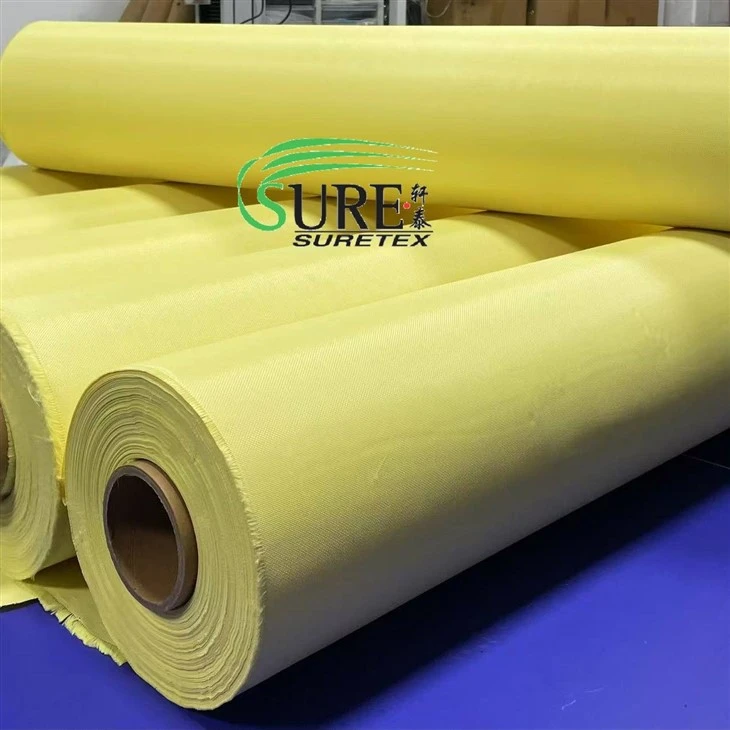
First off, let's talk a bit about aramid fabric itself. Aramid is a super - strong synthetic fiber. You've probably heard of it because of its use in bullet - proof vests and other high - performance applications. When we're talking about the raw Para aramid fabric roll, it already has some decent resistance to various elements. But when we add a coating to it, it takes things to a whole new level.
The coating acts as a protective layer on the aramid fabric. Think of it as a shield that guards the fabric from the harsh environment. There are different types of coatings available, and each one has its own way of enhancing the anti - corrosion properties.
One of the most common types of coatings is a polymer - based coating. Polymers are great because they can form a tight, continuous film over the fabric. This film acts as a barrier, preventing corrosive agents from reaching the aramid fibers. For example, in a chemical - rich environment, where there are acids or alkalis floating around, the polymer coating stops these chemicals from reacting with the aramid. It's like having a force field around the fabric.
Another type of coating is a ceramic - based coating. Ceramics are known for their high heat resistance and chemical stability. When applied to aramid fabric, a ceramic coating can withstand extreme temperatures and resist corrosion from a wide range of chemicals. This is especially useful in industrial settings where the fabric might be exposed to high - temperature processes or aggressive chemicals.

Let's take a closer look at how the coating actually works to prevent corrosion. When a corrosive agent comes into contact with the coated aramid fabric, the coating first absorbs the impact. It either physically blocks the agent from reaching the fibers or chemically reacts with it. For instance, some coatings have anti - oxidant properties. They react with oxygen in the air, which is one of the main causes of corrosion, and prevent it from attacking the aramid.
The thickness of the coating also plays a significant role. A thicker coating generally provides better protection. But it's a bit of a balancing act. If the coating is too thick, it can make the fabric stiffer and less flexible. This can be a problem if the fabric needs to be used in applications where flexibility is crucial, like in some types of clothing or flexible industrial components.
Now, let's talk about the real - world applications of coated aramid fabric with enhanced anti - corrosion properties. In the marine industry, for example, boats and ships are constantly exposed to saltwater, which is extremely corrosive. Coated aramid fabric can be used for sails, ropes, and even as a protective covering for various parts of the vessel. The coating ensures that the fabric doesn't degrade quickly due to the saltwater and other environmental factors.
In the aerospace industry, coated aramid fabric is used in various components. Planes are exposed to a wide range of conditions, from high - altitude cold to the effects of jet fuel and other chemicals. The anti - corrosion properties of the coated fabric help to extend the lifespan of these components and ensure their safety and reliability.
As an Aramid fabric supplier, I've seen firsthand how important it is to get the coating right. We work closely with our customers to understand their specific needs and recommend the best coating for their applications. Whether it's a small - scale project or a large - scale industrial application, we can provide the right coated aramid fabric.
If you're in the market for high - quality FR Aramid Fiber Fabric with excellent anti - corrosion properties, we're here to help. We have a wide range of options available, and our team of experts can guide you through the selection process. Whether you need a fabric for a one - time project or for continuous use in your production line, we've got you covered.
So, if you're interested in learning more about our coated aramid fabric or want to discuss your specific requirements, don't hesitate to reach out. We're always happy to have a chat and find the best solution for you.
References:
- Smith, J. (2020). "Advances in Coated Aramid Fabrics for Industrial Applications". Journal of Material Science.
- Johnson, A. (2019). "The Role of Coatings in Enhancing Aramid Fabric Properties". Textile Research Journal.


