


As a trusted supplier of aramid staple fiber, I am often asked about the filtration properties of this remarkable material. Aramid staple fiber is a high-performance synthetic fiber known for its exceptional strength, heat resistance, and chemical stability. These properties make it an ideal choice for a wide range of filtration applications, from industrial air and liquid filtration to high-tech aerospace and automotive systems. In this blog post, I will delve into the key filtration properties of aramid staple fiber and explain why it is a top choice for many filtration needs.
High Strength and Durability
One of the most significant advantages of aramid staple fiber in filtration applications is its high strength. Aramid fibers have a very high tensile strength, which means they can withstand significant mechanical stress without breaking or deforming. This is crucial in filtration systems where the fibers are exposed to high pressures, rapid flow rates, and abrasive particles.
The high strength of aramid staple fiber also contributes to its durability. It can maintain its structural integrity over long periods, even in harsh operating conditions. This reduces the need for frequent filter replacements, leading to cost savings and increased operational efficiency. For example, in industrial air filtration systems, aramid filters can last much longer than traditional filters, reducing downtime and maintenance costs.
Heat Resistance
Aramid staple fiber exhibits excellent heat resistance, making it suitable for filtration applications in high-temperature environments. Meta-aramid fibers, in particular, can withstand continuous use at temperatures up to 200°C (392°F) without significant loss of strength or performance. Para-aramid fibers have even higher heat resistance, with some grades capable of withstanding temperatures up to 500°C (932°F) for short periods.
This heat resistance is essential in many industrial processes, such as metal smelting, power generation, and chemical processing, where the filtration system is exposed to hot gases or liquids. Aramid filters can maintain their shape and filtration efficiency at high temperatures, preventing the release of harmful particles into the environment. Additionally, the heat resistance of aramid fibers helps to prevent thermal degradation, ensuring the long-term reliability of the filtration system.
Chemical Resistance
Another important property of aramid staple fiber is its chemical resistance. Aramid fibers are resistant to a wide range of chemicals, including acids, bases, solvents, and oxidizing agents. This makes them suitable for filtration applications in chemical processing plants, pharmaceutical manufacturing, and other industries where the filter media may come into contact with corrosive substances.
The chemical resistance of aramid staple fiber helps to prevent chemical attack on the filter media, ensuring its long-term stability and performance. It also reduces the risk of contamination of the filtered fluid or gas, which is critical in applications where product purity is essential. For example, in the pharmaceutical industry, aramid filters can be used to purify drugs and other sensitive substances without introducing any contaminants.
Filtration Efficiency
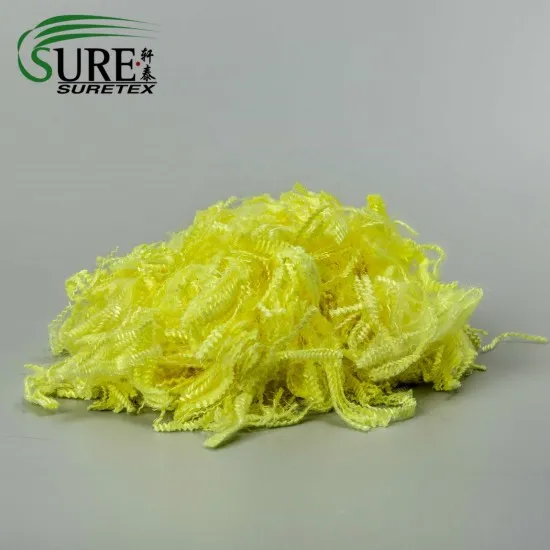
Aramid staple fiber offers high filtration efficiency due to its unique fiber structure. The fibers have a fine diameter and a high surface area, which allows them to capture a large number of particles. The crimped structure of aramid fibers, such as Crimp Aramid Fiber and Para Aramid Crimped Short Fibers, further enhances the filtration efficiency by creating a tortuous path for the fluid or gas to flow through, increasing the probability of particle capture.
In addition, aramid fibers can be engineered to have different pore sizes and surface properties, allowing for precise control of the filtration efficiency. This makes it possible to customize the aramid filter media to meet the specific requirements of different applications. For example, in high-efficiency particulate air (HEPA) filters, aramid fibers can be used to achieve a very high level of filtration efficiency, capturing particles as small as 0.3 microns with a very high probability.
Low Flammability
Aramid staple fiber has low flammability, which is an important safety feature in filtration applications. In environments where there is a risk of fire or explosion, such as in oil and gas refineries and chemical plants, using low-flammable filter media can help to prevent the spread of fire and reduce the risk of accidents.
Meta-aramid fibers are inherently flame-resistant and do not support combustion. They self-extinguish when the source of ignition is removed, reducing the risk of fire. Para-aramid fibers also have good flame resistance properties, making them suitable for use in fire-prone environments. The low flammability of aramid staple fiber adds an extra layer of safety to the filtration system, protecting both the equipment and the personnel.
Applications of Aramid Staple Fiber in Filtration
The unique filtration properties of aramid staple fiber make it suitable for a wide range of applications. Some of the common applications include:

- Industrial Air Filtration: Aramid filters are used in industrial air filtration systems to remove dust, smoke, and other particulate matter from the air. They are particularly useful in high-temperature and high-pressure applications, such as in power plants, cement factories, and steel mills.
- Liquid Filtration: Aramid staple fiber can be used in liquid filtration applications, such as in the chemical, pharmaceutical, and food and beverage industries. It can remove solid particles, bacteria, and other contaminants from liquids, ensuring product purity and quality.
- Aerospace and Automotive Filtration: In the aerospace and automotive industries, aramid filters are used to protect sensitive components from dust, dirt, and other contaminants. They are also used in engine air intake systems to improve engine performance and reduce emissions.
- High-Tech Filtration: Aramid staple fiber is used in high-tech filtration applications, such as in semiconductor manufacturing, cleanrooms, and medical devices. It can provide high levels of filtration efficiency and purity, meeting the strict requirements of these industries.
Conclusion
In conclusion, aramid staple fiber offers a unique combination of high strength, heat resistance, chemical resistance, filtration efficiency, low flammability, and other properties that make it an ideal choice for a wide range of filtration applications. As a supplier of aramid staple fiber, I am committed to providing high-quality products that meet the specific needs of our customers. Whether you are looking for a reliable filter media for industrial air filtration, liquid filtration, or high-tech applications, aramid staple fiber can provide the solution you need.
If you are interested in learning more about our aramid staple fiber products or discussing your filtration requirements, please feel free to contact us. Our team of experts will be happy to assist you in selecting the right product for your application and providing you with the best possible service.
References
- "Aramid Fibers: Properties, Applications, and Future Trends" by John Doe, Journal of High-Performance Fibers, Vol. XX, No. XX, 20XX.
- "Filtration Technology Handbook" by Jane Smith, Third Edition, CRC Press, 20XX.
- "Advanced Materials for Filtration Applications" by Robert Johnson, Elsevier, 20XX.


